01 · Sourcing
It starts on a farm, not in a factory
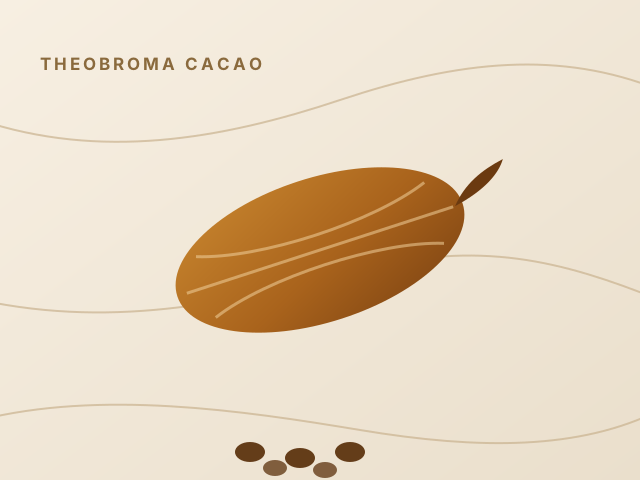
Cocoa grows within 20° of the equator. Pods are cut by hand, split, and the wet beans are scooped out with the pulp — everything that follows is decided here.
◆ A pod holds 30–40 beans. It takes roughly 400 beans — about one year of one tree — to make 1 kg of chocolate.
02 · Fermentation
Five days that create the flavour
Beans ferment in heaps or boxes for 4–7 days, then dry in the sun. This is where bitterness leaves and chocolate aroma appears. No fermentation, no chocolate taste.
◆ Fermentation can reach 45–50 °C in the heap. Skip it and the beans stay bitter and astringent — the flavour cannot be added later.
03 · Roast & winnow
Roasted, cracked, and the shell blown away
Dried beans are roasted to develop aroma, then cracked and winnowed so only the cocoa nibs remain. Origin and roast profile decide whether a bar tastes of red fruit, nuts or caramel.
◆ Light roast keeps the fruity origin notes; a darker roast pushes toward cocoa, caramel and nuts. This is why 75% bars from two origins taste nothing alike.
04 · Refine & conche
From nib to liquid chocolate — our refining hall
Nibs are ground with sugar and cocoa butter into a paste, then refined to a particle size the tongue cannot detect. Conching for hours drives off harsh volatiles and rounds the texture.
◆ Particle size is measured in microns — usually under 25 µm. Above that, chocolate feels gritty even if the recipe is perfect.
05 · Temper & mould
The 2 °C that give it the snap
Tempering cycles the chocolate through precise temperatures so the cocoa butter sets in a stable crystal form: glossy surface, clean snap, no grey bloom.
◆ Bloom is not spoilage — it is cocoa butter that set in the wrong crystal form. Correct tempering plus 16–18 °C transport prevents it.
06 · Wrap & label
Your artwork, your language, your barcode
Bars, boxes and callets are wrapped on the line. For private label we print your brand and apply multi-language ingredient, allergen and nutrition panels — the product inside stays the same.
◆ We can change what the pack says without changing what is inside: same recipe, new label, artwork approved by you before printing.
07 · QC & documents
Batch record, then paperwork
Each batch is checked for weight, texture and appearance; a sample is retained. The batch number on the box is the number on the COA that ships with your documents.
◆ The batch code traces back to the production day. That is what lets a supermarket buyer answer a complaint with facts instead of guesswork.
08 · Reefer & your port
16–18 °C all the way to discharge
Goods are pre-cooled, loaded into a temperature-controlled container, never co-loaded with spices, seafood or detergents. Loggers travel inside and the record is issued with the documents; LCL is fine for a first order.
◆ Chocolate prefers 16–18 °C. Below 12 °C is as risky as above 24 °C — a cold-damaged load can bloom on arrival just like a hot one.